Showing posts with label books. Show all posts

Friday, 5 June 2009

The City of Dreadful Night

I'm currently reading "A Fraction of the Whole" and really enjoying it. It's a little difficult to explain what its about (everything) but it does have plenty of references to philosophers, books and poets. A poet 'James Thomson' is mentioned more than once (whom I'd never heard off) and the book contains this expert from one of his poems. I really liked it so I'm posting the except here; The full poem is here, The City of Dreadful Night.

"Who is most wretched in this dolorous place?
I think myself; yet I would rather be
My miserable self than He, than He
Who formed such creatures to His own disgrace.

"The vilest thing must be less vile than Thou
From whom it had its being, God and Lord!
Creator of all woe and sin! abhorred
Malignant and implacable! I vow

"That not for all Thy power furled and unfurled,
For all the temples to Thy glory built,
Would I assume the ignominious guilt
Of having made such men in such a world."

Tuesday, 21 April 2009

Hatuey

I am currently reading “The Brief Wondrous life of Oscar Wao” which, aside from being very good, contains lot’s of footnotes and asides about the Dominican Republic and it’s history. Not a subject I know much about.


The most recent footnote regarded a native chief called “Hatuey” who tried to throw off the Spaniards in 1511. He was captured in the end and before being burned at the stake a priest asked him if he would accept Jesus and go to heaven.

Hatuey asked "Are there white men in heaven?" When the priest assured him that there were many, Hatuey replied "Then I’d rather go to Hell."*;

A quote I really liked and it could easily be paraphrased for use by today’s unbelievers, “Men of Faith”, perhaps?

I got an extra kick out of this as it really puts the Popenfuhres opinion of the conquest of the Americas into context;

Pope Benedict XVI told Latin American bishops in Brazil that American Indians had been "silently longing" to become Christians 500 years ago.

* There seems to be several differing versions of this statement on the web, I’ve used the one from the book

Thursday, 5 February 2009

The Assassination of Julius Caesar

I really enjoyed this book, it painted Caesar in a particularly good light (don't mention the Gauls!) and provided a different view of the so-called "Roman Mob".

Parenti shows that not only is history written by the winners, it's written by the upper classes of the winners - his "Gentleman Scholars". he has a wonderful quote to illustrate this which roughly is;
"Conformity of bias is taken as objectivity"
From what I can gather (browsing the web) this book isn't particularly popular with many historian's but Parenti's view of Cicero and the Optimates is far closer to more recent depictions that the traditional view.

If you're a fan of Roman history give it a go. It's short, snappy and interesting.

Thursday, 22 January 2009

Peter Watts (hopefully) upcoming book

I'm a big fan if Peter Watts (well, considering I've only read two of his books - but Maelstrom is on the way) and today I read in his blog the cover blurb for this latest and it sounds fantastic!
A Different Kind of Singularity.

The eve of the 22nd century. A world where the dearly-departed send postcards back from Heaven, and Jainist evangelicals make scientific breakthroughs by speaking in tongues; where genetically-engineered vampires solve problems intractable to baseline Humans, and soldiers come with zombie switches that shut off their own self-awareness during combat. A world under blatant surveillance by an alien presence that refuses to show itself.

Daniel Brooks is a living fossil: an old man in a world of immortals, a field biologist in a world where all biology has long since turned computational, an unwitting catspaw used by terrorists to kill thousands. Taking refuge in the Oregon desert, he turns his back on a humanity that shatters into strange new subspecies with every heartbeat. But he isn't hiding from anything; he awakens one night to find himself at the center of a storm that's about to turn all of history inside-out.

Now he's trapped in a ship bound for the center of the solar system. To his left is a grief-stricken soldier with a zombie switch in his head, obsessed by whispered messages from a dead son half a lightyear away. To his right is an autistic hacker who hasn't quite discovered that Dan Brooks is the man she's sworn to kill on sight. A vampire and its entourage of zombie bodyguards lurk in the shadows behind. And dead ahead, a handful of rapture-stricken monks takes them all to a meeting with something they will only call "The Angels of the Asteroids".

But whatever they encounter, there in the blinding maelstrom above the sun's north pole, is the furthest thing from anyone's vision of divinity. By the end of their pilgrimage the whole world is coming apart at the seams— and Dan Brooks, the fossil man, is face-to-face with the biggest evolutionary breakpoint since the origin of thought itself.

The Singularity's here. It's too late to go back. And all those starry-eyed optimists, the extropians, the transhumanists, the rapture-nerds and technophiles who sang the praises of technology=magic — somehow, none of them realized there'd be no room for humanity in a post-human age …

Friday, 5 September 2008

The Roma Sub Rosa Series

Steven Saylor's historical mysteries set in ancient Rome and featuring investigator Gordianus the Finder.

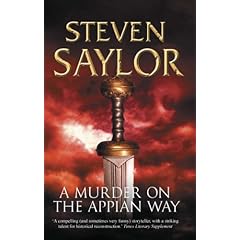
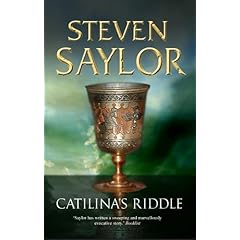
I started reading this series a few months back after borrowing the first three from a friend at work and last night I finally finished the last book. I really enjoyed the series but obviously thought some where better than others. Two of the best where "A Murder on the Appian Way" and "Catalina's Riddle" which kept me gripped and guessing right to the very end.


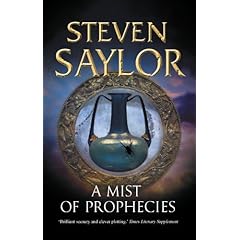
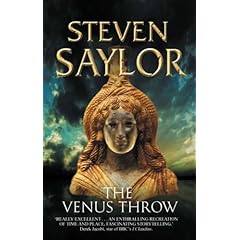
Two honourable mentions are "Venus Throw" which delivered a cracking surprise and "A Mist of Prophesis" which delved into the character of Gordianius him much more than any of the preceeding novels.

One of the great strengths of these books is the characterisation he lends to the supporting cast of famous (and not so famous) historical figures. I have read about Cicero many times but I think forever more it will be Saylors' Cicero I imagine, likewise his Catalina and Clodius. You know the author is doing a good job where you hope a doomed character won't be doomed after all. More so in a historical novel.
Many of the final novels deal with events surround Julius Caesar but I got the distinct impression that both the Character and Author where getting a little tired of late Roman Republic shenanigans. That's not to say I didn't enjoy them (I really did) but it might be time to start wrapping it up.


Tuesday, 1 July 2008

Books I've read recently, and what wot I thought

Originally I set out to try and write a short entry about any book I had just read but lately I just haven't had the time, so in an attempt to catch up here's a one line review of the most recent ones;


Why Europe and Asia raced ahead of everywhere else. Required reading for everyone.


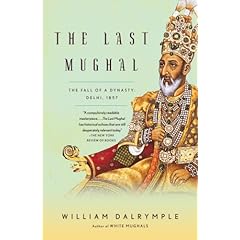
Fantastic history of the Indian Mutiny and the battle of Delhi, full of first hand accounts of a savage conflict.


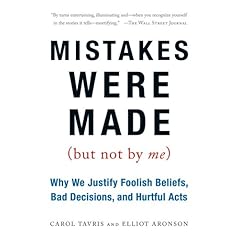
I learnt a few things about myself reading this Greta Christina's review tells you all you need to know


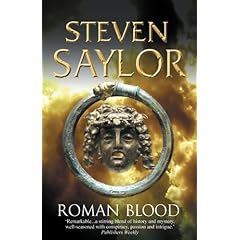
A very fine historical novel, compeletly hooked on the series right now, see also - Catalina's Riddle and Murder on the Appian Way


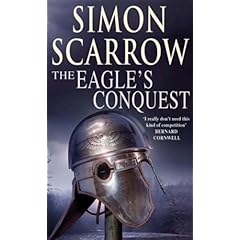
More Romans, this time the invasion of Britian, very enjoyable.

Thursday, 10 April 2008

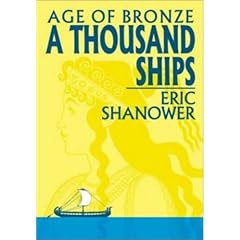
Age of Bronze: A Thousand Ships

The "Age of Bronze: A Thousand Ships" is part 1 of a projected 7 part series detailing the entire Trojan war, from the causes and background of the war through to its conclusion.

This first installment begins with Paris as simple (if arrogant) cow herder who is discovered to be a prince of Troy presumed to have been murdered as a child. Shortly thereafter he is then sent on a mission to Achaea on behalf of the king of Troy, Priam, where he seduces Helen and takes her away.

From then on the book deals with Agamemnon's and Menelaus's efforts to raise the Achaean army in order to attack Troy, gain revenge and retrieve Helen, so we get to see the "madness" of Odysseus and the search for Achilles as well as other episodes from the Trojan War story.

I have to say I really loved this graphic novel, it doesn't rush head long in to the action but instead built up the story and characters. The author has also lovingly researched the material both from a mythical and historical perspective which I found very satisfying. Like I said this is only part 1 of the story, part 2 and half of part 3 are currently out with new editions appearing every few years so it's going to be long hard to wait before we can read it all.

For more, Salon have a very favourable review here.

Tuesday, 25 March 2008

Soldier of Sidon

I read Soldier of Sidon over the Easter break which is a sequel to the Soldier of the Mist books I read last year and reviewed here.

This time we find Latro in ancient Egypt still trying to find release from his curse of only remembering events from the previous 24 hours while simultaneously being capable of seeing and conversing with the gods and spirits.

Once again Wolfe has vividly recreated the ancient world and given voice and character to it's gods and demons. Latro is as sympathetic as ever and is helped and hindered by a large cast of supporting characters.

For me this was the most accessible of all the Latro books but from reading the reviews on Amazon not everyone agrees. Perhaps I just gave Latro his due respect by reading his words carefully and by not expecting any answers to be served up to me. One quibble is that the book does not so much end as in it drifts off with many questions left unanswered and with Latro himself setting off on a new quest. I assume this means there will be another, I certainly hope so.

Thursday, 20 March 2008

Blindsight

"Whenever I find my will to live becoming too strong, I read Peter Watts."
—James Nicoll
It was the above quote that first drew me to Peter Watts and by extension, Blindsight. The novel was out in hardback at the time so I decided to wait for the paperback to become available before buying it but then my birthday rolled around in January and I received it as a present, I finally got around to reading it this week.


WOW!

It's hard to summarise Blindsight, the Amazon synopsis tries and while it's strange and intriguing I don't think it quite captures it.
It's been two months since a myriad of alien objects clenched about the Earth, screaming as they burned. The heavens have been silent since - until a derelict space probe hears whispers from a distant comet. Something talks out there: but not to us. Who to send to meet the alien, when the alien doesn't want to meet? Send a linguist with multiple-personality disorder, and a biologist so spliced to machinery he can't feel his own flesh. Send a pacifist warrior, and a vampire recalled from the grave by the voodoo of paleogenetics. Send a man with half his mind gone since childhood. Send them to the edge of the solar system, praying you can trust such freaks and monsters with the fate of a world. You fear they may be more alien than the thing they've been sent to find - but you'd give anything for that to be true, if you knew what was waiting for them.
Blindsight is about first contact, but there are no green skinned beauties here for the dashing captain to have sex with. In fact there isn't any dashing captain, the captains a vampire and the crew are rightly terrified of him. The aliens are utterly alien, Watts outdoes Lem's Solaris in the otherness of his aliens. This alone is worth the price of admission and yet the book offers so much more.

Interweaved throughout the novel is the question of consciousness. Where does it begin and end? Is it real? Is it useful? None of the characters are 'normal' humans (or 'baseline' as they are referred to in the book) which results in a strange disconnect of trying to understand the humans as well as the aliens.

Another outstanding achievement in this novel is the vampire captain itself. Vampires have been done to death recently (hee hee) but Watts has created something here that Bram Stoker himself would have been proud of. A real vampire I would dare to say, right down to explaining the vampire aversion to crosses. A vampire that is a predator and not a whiney teenage or rich dude speaking slowly. A vampire you definitely would not invite to tea or in Buffy's case, date.

Blindsight was on the shortlist for last years Hugo's but was beaten by Venor Vinges 'Rainbows End' which I read last month but didn't particularly like and so, bambi'esk, didn't blogg about. I can only assume the Hugo judges had half their brain missing when they overlooked this book.

I liked Blindsight so much I wouldn't recommend it. If I did and you didn't like it I would take it as a personal insult. But if you don't give a shit about that, read this book.

edit:
review of Blindsight on scifi.com
Peter Watts website
Download Blindsight for free

Wednesday, 19 March 2008

R.I.P. Arthur C. Clarke

Science Fiction God Arthur C. Clarke died yesterday. Every mention of his death includes a reference to the movie 2001: A Space Odyssey which to my mind is more Kubrick's achievement. What Clarke did do was write some terrific and influential novels, Childhoods End being so influential in fact that most people have never heard of it, but everyone knows the image of gigantic spaceships hovering over the worlds cities.

Friday, 14 March 2008

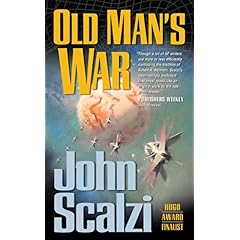
Old Man's War

With his wife dead and buried, and life nearly over at 75, John Perry takes the only logical course of action left him: he joins the army.

I'm still in a SciFi frame of mind and so after reading lots of good things about this book I decided to pick it up and I'm sure glad i did.

This is a book about future war. The galaxy is filled with life and almost all of it is competing with humanity for real estate and this means we have to fight. And it's this fighting that's the real strength of this novel, somehow Scalzi manages to keep it fresh, interesting and exciting each time. I honestly couldn't get enough. In fact I finished the book in just three days (but to be fair it's only about 310 pages long) and am already anticipating the next installment.

One strange aspect of the book where all the references to religion. A lot of scifi stories tend to ignore or downplay religion but in this one belief and ritual feature heavily for both humanity and the alien races which made it feel very Babylon-5-y . It didn't distract too much from the story and I ended up putting it down the the fact the author is American but it did feel a little tacked on but maybe the next book will reveal more.

Old Man's War is a new take on a old idea in science fiction so it's not exactly "where no man has gone before" but stories and myths are reinterpreted in every generation and Scalzi's interpretation is excellent.

Monday, 25 February 2008

New German Children's Book, Part II

Had a chance to read the story earlier and found it quite charming and the punchline is brilliant, the story starts with the poster proclaiming

He who knows not God, is missing something!

But after meeting a rabbi, a priest and a mufti the hedgehog and the piglet conclude the poster has one word to many;

He who knows not God, is missing something!

New German Children's Book

One of the fist things you really notice when you give up religion/god is the hypocrisy of the religious mind. The denialism blog has a post featuring a new children's book from Germany called Wo bitte geht's zu Gott?, fragte das kleine Ferkel (Which is the way to God, please?, Little Piglet Asked).

The book tells the story of a piglet and a hedgehog, who discover a poster attached to their house that says: "If you do not know God, you are missing something!" This frightens them because they had never suspected at all that anything was missing in their lives. Thus they set out to look for "God." Along the way they encounter a rabbi, a bishop and a mufti...

An English translation of the book can be found here and the illustrations here, I have to say I thought it looked very nice. One of the commentator's on denialism left the following comment which I liked and will post here and hopefully neither denialism not the poster will mind.
I got the book yesterday and read it. So... is it evil atheistic garbage? I don't think so. As a matter of fact, I was positively surprised at the content. There is snark about religion, but it's not a lot of it. My favorite part is the last page where about a dozen people of all sizes, shapes and ethnicities are drawn naked, with only the Christian bishop, the rabbi and the mufti being ashamed of their nudity.

As to the rest of the book, here's a rundown of the criticism: The piglet is astonished that it's mother should have been Jewish for it to be Jewish, as well. It's sad about God killing all the people and animals in the Great Flood, and it asks the rabbi how, if humans can invent gods (as he claims), he knows that the God he prays to is not an invention.

With the Christian priest, the piglet is turned off by the idea of God sending his own son to be crucified in order to wash our sins away with blood ("icky blood"), as well as the Catholic idea of eating a part of Jesus's body during mass (it calls the Catholics »cannibals« then, leading to the authors being sued by a Catholic ministry).

Finally the piglet and its friend get to the mosque, where they're surprised by the idea of praying five times a day and having to wash beforehand every time. They inquire how the people know that Mohammed didn't make those rules up and are being chased out of the mosque for it.

Outside, on the temple hill (where all three "temples" stand), the three priests meet, try to catch the piglet and its friend, but get into a physical argument about which faith sports the worst kind of hell. In the meantime, the piglet goes home and enjoys life again, all the while having a laugh about those funny humans: »If there is a God, he's surely not living in those haunted castles«.

All in all, the book is open about criticism of the biblical faiths, but I wouldn't say it's overly dismissive, offensive or even hateful. It *is* literature designed to get children off their faith, or better even, literature designed for humanists, atheists or whatever to give to their kids. And in that, it's not only a book about the value of free minds, critical thinking or the like, but a book about strange or silly ideas in faith (with the above-mentioned examples).


A separate post in the comments section has some reaction to the book, I found this one to be particularly funny.
The perfidious and dangerous thing is that the very attractive graphical presentation is aimed at young children, which are defenceless against such anti-religious agitation

Stephan Kramer, General Secretary of the "Central Council of Jews in Germany"
Of course there is no sense of irony in the above statement, but it does show religious leaders are aware of the malleability of young minds and how crucial it is to wrap them at an early stage.

Friday, 18 January 2008

The Road

The road is the story of a man and his son traveling on foot through a post apocalyptic America. They must survive freezing temperatures, starvation, bandits and cannibals in a world that has turned to ash as they search for ... safety, "the good guys", salvation?

The road is a bleak novel, sparsely written and has the feel of a nightmare. Recommended.

Thursday, 17 January 2008

Spin

Spin was another spur-of-the-moment purchase. I had heard a lot about it and knew it won the Hugo in 2006 but the synopsis of the book put me off.

"[three teenagers] witness the erection of a planet-spanning shield around the globe, blocking out the universe. Spin chronicles the next 30 odd years in the lives of the trio, during which 300 billion years will pass outside the shield"

Don't laugh but it was the "300 billion" thing that put me off, I thought it was ridiculous, but I managed to overcome my misgivings and picked it up when i found it for €7 in a local bookshop.

When I started the book I happily discovered that whomever wrote the synopsis got it wrong and only 4 Billion years pass outside the shield (dubbed 'The Spin') which of course is way more plausible. Spin is a rare book in science fiction (at least in my experience) in that the many wonderful hard-scifi elements are keenly balanced by the protagonists reaction to them. How they cope with the inescapable fact that a vastly superior intelligence has taken an unexplained interest in humanity and the dawning realisation that outside the spin, the sun is dying and their prison is now a lifeboat.

Spin is a superb book, an exhilarating read and definitely recommended.

Thursday, 3 January 2008

RIP MacDonald Fraser

Sad news today, George MacDonald Fraser author of the Flashman novels has died. I've read about six or seven of the books and have really enjoyed them and certainly recommend them (unless your easily offended). I don't know much about the man himself but I liked his books and so he gets the nod from me.

Wednesday, 19 December 2007

The Warriors Apprentice

I enjoyed Cordellia's Honor so much I had to go out and get the next one entitled "The Warriors Apprentice". This book follows the adventures of Cordellia's son Miles, who was born at the end of Cordellia's Honor. This is the first book in a series known as The Vorkosigan Saga and are based around teh advertures of Miles Vorkosigan. This book begins when Miles is 17 and trying to enter the Barrayan Military academy, he fails, is sent off-world and in a series of escalating bluffs winds up in the middle of a war.

As with the previous book the writing is crisp and clear and the plot zips along with the clever and likable Miles. If anything this book is even more humorous than Cordellia's Honor with several laugh-out-loud moment's. Thats not to say its a comedy in the vein of the Hitchhikers Guide to the Galaxy but I've read a lot of 'hard' scifi and so this is quite a breath of fresh air. Surprisingly this book is considered one of the weakest in the saga, that being the case I look forward to reading the stronger ones. Its been a real treat discovering these book's I can't wait to find out what happens next.

Friday, 14 December 2007

Cordelia's Honor

Did you know that Lois Mcmaster Bujold has one 4 Hugo Award's more than every other author except Heinlein? I didn't, but when I first heard about this I decided I'd better find out what all the fuss was about and so I picked up Cordellia's Honor.

Cordelia's Honor is a compilation of two of novels: SHARDS OF HONOR and BARRAYAR (Barrayer won a Hugo). The main character in both is Cordelia Naismith a captain on an interstellar exploratory mission and it follows her adventures as she is captured by the militaristic Barrayans, escapes, is captured again, falls in love, gets married and then learns to survive and thrive in the hostile Barrayan society.

To non-scifi readers that summary might sound kinda corney and the cover of the book certainly doesn't help but trust me when I say these where two terrific books. Full of likable and loathable characters, well written and unusual for scifi, humorous. The closest thing I can compare them to in style are the Flashman books (only without the cad).

Holy Crap

Amazon have brought that J.K. Rowling book for £1,950,000. WTF! madness.